Adam Smith Quotes
Consumption is the sole end and purpose of all production; and the interest of the producer ought to be attended to only so far as it may be necessary for promoting that of the consumer. The maxim is so perfectly self-evident that it would be absurd to attempt to prove it. But in the mercantile system the interest of the consumer is almost constantly sacrificed to that of the producer; and it seems to consider production, and not consumption, as the ultimate end and object of all industry and commerce.
Smith, Adam. An Inquiry into the Nature and Causes of the Wealth of Nations. 3rd ed., vol. 3, A. Strahan and T. Cadell, 1784, p. 24.


The Consumer Finance Protection Bureau was established over much Conservative opposition in the reforms that were established in the wake of the Meltdown of 2008 and the Great Recession. And the Republican Party was critical of everything that it did. The issue of whether or not the Federal government should even have a role in consumer protection was been debated for over a century. This quotation is very ironic in that the first major federal legislation to assist American consumers was pushed though by Republican President Theodore Roosevelt. Over 100 years later, it was the Republican Party that fought to weaken or eliminate Federal efforts. Ryan, the Republican legislative leader, led the effort. Ironically, most businesses agreed with him about the micromanagement as it was they who had to change their modes of operation to comply with CFPB regulation, but the vast majority of consumers did not feel that they were being micromanaged although many agreed that the companies interacting with consumers were certainly being managed much more tightly.


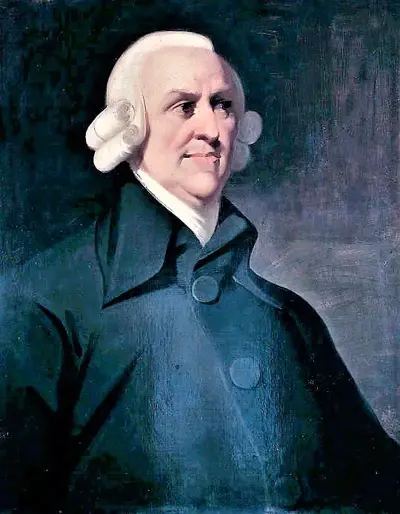
Adam Smith FRSA was a Scottish economist, philosopher as well as a moral philosopher, a pioneer of political economy, and a key figure during the Scottish Enlightenment, also known as ''The Father of Economics'' or ''The Father of Capitalism''. Smith wrote two classic works, The Theory of Moral Sentiments (1759) and An Inquiry into the Nature and Causes of the Wealth of Nations (1776). The latter, often abbreviated as The Wealth of Nations, is considered his magnum opus and the first modern work of economics. In his work, Adam Smith introduced his theory of absolute advantage.
