Richard Dawkins Quotes
Complex, statistically improbable things are by their nature more difficult to explain than simple, statistically probable things.
Dawkins, Richard. The God Delusion. Bantam Books, 2006, p. 113.


Historically, in the first half of the 20th century, nuclear scientists discovered that probability governed and was necessary for understanding quantum mechanics—the laws of physics governing tiny objects like atoms, electrons, protons and even quarks. To many, this seemed a contradiction in that it was hard to conceive particles following laws and yet behaving randomly at the same time. However, it did not take long before all the scientists adjusted their thinking and learned to live and work with that was then a type of contradiction but is no longer thought so as men and women have learned to think in a new way. This quotation illustrates that the greatest scientists in the world, in a very short period of time, had to change their entire mode of thinking. There were no real holdouts or “conservatives” who wanted to maintain the older values. This would never happen in politics, where change is not accepted very quickly.

This quotation is important because it illustrates a common problem politicians have with funding science and mathematical research. Actually, so far many millions of dollars have gone into studying and developing methods of producing random numbers and sequences of them which are extremely important to many branches of science and essential to the operation of computers. Yet to the layman, the expense of public money to find better ways to pick random numbers seems totally absurd. Just pick one or use any random number. However, it is virtually impossible for a human being to truly randomly pick a number from 1-999. Most methods produce biases which invalidate the randomness. But this is very counter intuitive. So much decision making about scientific funding and policy is counter intuitive to the politician and the general public.

Politicians, like many other people, often confuse correlation with causality as few have studied or understand the mathematics of probability.


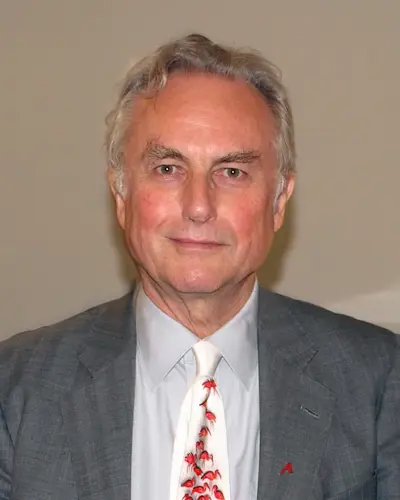
Richard Dawkins FRS FRSL is a British ethologist, evolutionary biologist, and author. He is an emeritus fellow of New College, Oxford, and was the University of Oxford's Professor for Public Understanding of Science from 1995 until 2008. An atheist, he is well known for his criticism of creationism and intelligent design.
