Coretta Scott King Quotes
Civil rights leaders, including my husband and Albert Turner, have fought long and hard to achieve free and unfettered access to the ballot box. Mr. Sessions has used the awesome power of his office to chill the free exercise of the vote by black citizens in the district he now seeks to serve as a federal judge.
King, Coretta Scott. Letter to Senator Strom Thurmond. 19 Mar. 1986. United States Senate Committee on the Judiciary.


Preclearance was a requirement that any change in the voting or registration laws, rules or procedures needed to be approved by the Federal Justice Department. He was testifying about why preclearance was important and why it was placed in the Voting Rights Act every time it was reauthorized. See {635271} for what happens without preclearance.


In the beginning of the 21st century, many republican state legislatures attempted to change the voting laws to eliminate the possibility of voter fraud which was not a serious practical problem in America. However, a consequence—some argue indented and some argue unintended—was that it was harder for certain groups of people to meet the new requirements and therefore was a de facto voter suppression for some people such as the very elderly, the homeless, and the poor. Many of these efforts were declared unconstitutional by the courts.


At the time Negroes were prohibited from voting by a series of discriminatory criteria for voter registration and intimidation so that Blacks would not generally even try to register. But the Civil Rights movement changed tactics and organized large scale attempts at voter registration. Mayor Thompson and the white power structure of the town were not going to allow that. They had not only enlarged the police department but the city purchased an a small armed tank.


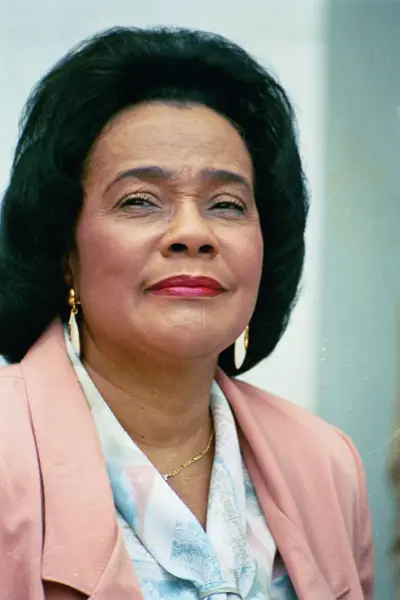
Coretta Scott King was an American author, activist, civil rights leader, and the wife of Martin Luther King Jr. As an advocate for African-American equality, she was a leader for the civil rights movement in the 1960s. King was also a singer who often incorporated music into her civil rights work. King met her husband while attending graduate school in Boston. They both became increasingly active in the American civil rights movement.
