Confucius Quotes
Chung Yu asked the Master about government, and was answered:] Require of others only what you have first taught them.
Confucius [Kung Fu-tse], 551 BC-479 BC, Chinese Philosopher and Minister of Works and Justice, Analects
Sourced by: Eigen's Political and Historical Quotations


This is an amazing speech which illustrated the best of the development and growth of Islam. Note that: The ruler who has just been given ALL secular AND religious power admits candidly that he may not be the best qualified. This would not happen for over another 1000 years and even today is very rare in any society. In addition, he invites the citizens to correct him when he is wrong. Later, Calihs would, like the Christian kings and popes claim infallibiity and kill any who suggested otherwise. And daring to correct the ruler was capital offence for most of history and is even dangerous in some Muslim countries today. Last and perhaps most amazing, the new Caliph called for an affirmative leveling of the inequality of rights and power and announces it asa one of his major responsiblities. It is this kind of vision so unheard of at the time which shows us why so many flocked to Islam at the time. From a fairness, human rights, and accoutabiity of the ruler point of view Islam was the most modern of the religions then. Tragically, other forces shaped Islam for the next 1500 years and most Muslim countries become the least modern and its rulers are least accountable to the citizenry with none of the other rights and concept of fairness that Abu Bakr and other early Islamic leaders brought.


It is not clear that L’Estrange actually originated the phrase that politicians use so frequently. It may have been a common aphorism of the day and place. However, this is the earliest English written use of the statement that we have yet found.


Note that the two do NOT ALWAYS coincide. There are those who argue that law should be respected, right or wrong. There are also those who argue that law should be respected, only when it is in the right. Note also that “respect” and “obedience” are two different things. Some people argue that law and the courts and government must have respect. Others that they are only due obedience but not necessarily respect when they are in the wrong. Still others, like Thoreau, that obedience even is not required when the law is wrong. There are those who take this to the degree that obedience to a “wrong” law is wrong and there is a DUTY to disobey a wrong law. However, a more nuanced view does not treat all laws as the same importance. I may think a particular tax is unjust and wrong, but obedience does not necessarily have moral consequences. A law that says that people with a certain religion must not be hired, however, is sufficiently immoral that I am obliged to disobey it.


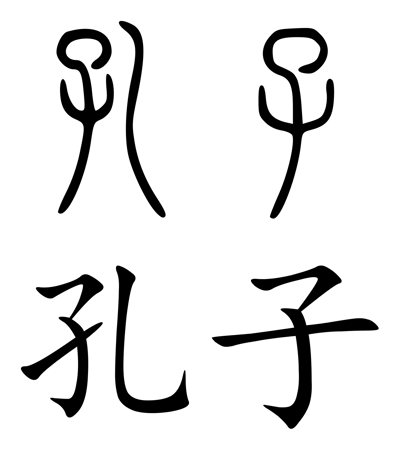
Confucius (551–479 BCE) was a Chinese philosopher and politician of the Spring and Autumn period who was traditionally considered the paragon of Chinese sages. Widely considered one of the most important and influential individuals in human history, Confucius's teachings and philosophy formed the basis of East Asian culture and society, and remain influential today.
