Percy W. Bridgman Quotes
By far the most important consequence of the conceptual revolution brought about in physics by relativity and quantum theory lies not in such details as that meter sticks shorten when they move or that simultaneous position and momentum have no meaning, but in the insight that we had not been using our minds properly and that it is important to find out how to do so
Percy W. Bridgman, 1882-1961, Physicist, 'Quo Vadis'. In Gerald Holton (ed.), Science and the Modern Mind, 1971
Sourced by: Eigen's Political and Historical Quotations

Born was a refugee who escaped to England from Nazi Germany.

We have two opposite dynamics operating today. On the one hand the scientific breakthroughs like Quantum Mechanics and genetic engineering widen the intellectual gap immensely between the average person (and politicians) and the scientist—at a time when society must make enormous decisions on scientific matters. On the other hand, there have never been so many people before educated in the sciences. There are many (not a majority) high school students who today understand Relativity and even well and broadly educated non-science college graduates are often familiar with Relativity, Quantum Mechanics, and other scientific breakthroughs of the 20th century. The world as a whole has never had so many scientifically literate people as today, nor has it ever had so many scientifically illiterate people today.


There have always been critics and scientists differing on the most significant findings of science. Even as late as 1931, there were those who would oppose Relativity.

Much of modern science involves non-intuitive concepts that can rarely if ever be discovered using common sense. It was hard enough for most people to accept the notion of an infinite number, but now we know that there are many infinite numbers and they are all different form one another. Darwinian thinking was contrary to most learned thought of the day, and even much public opinion today. Even Albert Einstein had to struggle to comprehend the findings of Quantum Mechanics which are very non intuitive—one object can be in two different places at the same time. Meanwhile, most people are totally unaware that the world around is does not correspond to normal human intuition and common sense. Yet these are the same and only tools that we continue to use in making decisions about our society. And the fundamental truths of yesterday, the foundation of past thinking and glory, are the naïve simplifications and errors of today and become the superstitions of tomorrow.

Gross and the Nazi official party line completely rejected what some called “Jewish Science” the new world of Theoretical Physics that had grown out of Einstein’s early 20th century work. Although Einstein and most of the great German physicists fled Germany for America, England and Scandinavia, there were Heisenberg and enough left that Germany was probably capable of development of an atomic weapon. But since such a weapon would have been based on politically unacceptable “Jewish science,” no one would dare suggest it seriously. Ironically, Gross actually thought that The Theory of Relativity was only a theory which by that time, it was not and had been validated by physicists the world over—including Germany. The German scientists were directed at traditional German technology to develop jet airplanes and long range rockets, both of which they developed successfully. It was however too late to make a difference, and if these weapons were strong enough to defend Germany from invasion, the first Atomic bombs would have been dropped on Germany as that was the plan and the major purpose of development. Only the collapse of Germany under the allied attacks, moved the target from Germany to Japan.


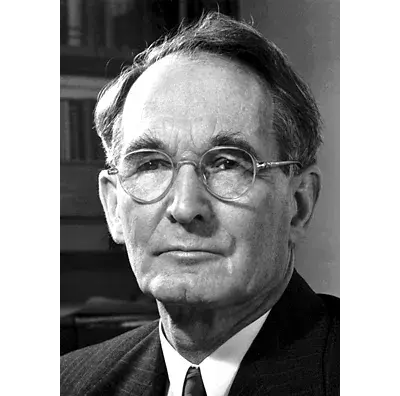
Percy Williams Bridgman was an American physicist who received the 1946 Nobel Prize in Physics for his work on the physics of high pressures. He also wrote extensively on the scientific method and on other aspects of the philosophy of science. The Bridgman effect and the Bridgman–Stockbarger technique are named after him.
