Constance Baker Motley Quotes
By 1962, King had become, by the media's reckoning, the new civil rights leader.
Motley, Constance Baker. Equal Justice Under Law: An Autobiography. Farrar, Straus and Giroux, 1998.


25 of the Union’s TWA Airline Workers in Memphis Tennessee had signed a petition to the Union objecting to the Union’s support for King’s desegregation campaign. Quill responded by inviting King to give the main address at the annual union convention. He was prophetic of the danger King faced, but died before King was assassinated.


The planning and management of the March on Washington of 1963 was dominated by well educated and/or very experienced leaders of Middle Class type institutions—churches, labor unions, governments, educational institutions, and even middle class entertainment. A few Black critics felt that the deep South Black Sharecroppers were not well represented, intellectually or culturally. To many this was the great genius of the March on Washington where there were a hundred million Americans prepared to find great fault with the march and what they saw was a reflection of themselves trying to protest a grievance.

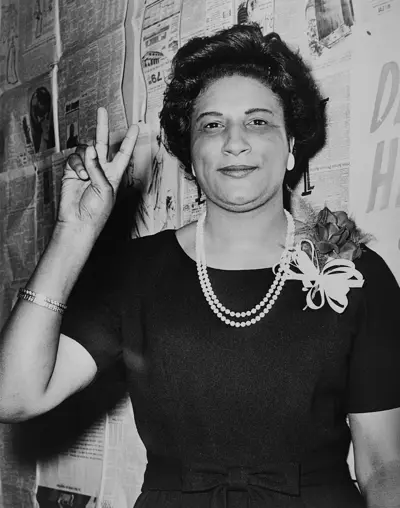
Constance Baker Motley, was a key strategist of the civil rights movement, lawyer, judge, state senator, and Borough President of Manhattan, New York City. She obtained a role with the NAACP Legal Defense and Educational Fund before entering law school as a staff attorney and continued her work with the organization for more than twenty years. She argued 12 landmark civil rights cases in front of the Supreme Court, winning nine. She was a law clerk to Thurgood Marshall, aiding him in the case Brown v. Board of Education. Baker Motley was also the first African-American woman appointed to the federal judiciary, serving as a United States District Judge of the United States District Court for the Southern District of New York. Judge Motley died on September 28, 2005 in New York City of congestive heart failure.
