Rich Lowry Quotes
Bush's faith in the rightness of his strategy in the broader war is deep-seated. It is a product of faith.
Lowry, Rich. "Bush in Person." National Review, National Review Inc., 2006.

Kuo resigned in protest over the callous use that the administration was making of the religious right. Ironically, Bush, more so than any other American President, had pushed or crossed the wall of separation of church and state to provide Federal funds to Protestant Evangelical churches. However Kuo was of the opinion that the motivation was political and not principled or evangelical.


See a similar sentiment by Tallyrand


Chavez frequently insulted officials and leaders of other countries. See linked quotes for examples.

Podharetz was citing the Vietnam war. The two American occasions where the plausibility seemed to fade were the Vietnam War and The Irag war. Both Presidents Lyndon Baines Johnson and George W. Bush as Bismarck predicted, had much political trouble over the wars.

The principle applies to religious and political doctrine, both.

Lincoln was a deist but he was never a favorite of the official clergy of any of the religions. When he ran for President in 1860, 20 of the 23 clergymen of his home town, Springfield, IL, opposed him. As he assumed office he was much more prudent in his religious remarks and in the view of some historians political realities and pragmatics caused him to be more circumspect. His oldest friend and law partner believed him to be an unbeliever. See {586285}.


1st Earl Baldwin of Bewdley. Though members of the same Conservative Party, Churchill was a major opponent of Baldwin’s peace and “appeasement” efforts and publicly castigated Prime Minister Baldwin. Yet Baldwin, if he could not stave off war, wanted his critic to serve as Prime Minister if war was inevitable. Churchill never had much respect for Baldwin. See {626930}.
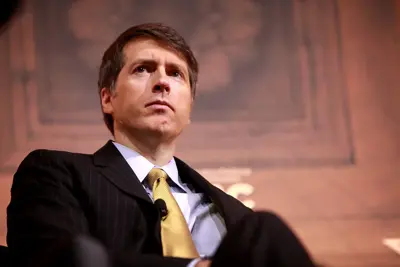
Richard Lowry (/ˈlaʊri/; born 1968) is an American writer who is the editor of National Review, an American conservative news and opinion magazine. Lowry became editor of National Review in 1997 when selected by its founder, William F. Buckley, Jr., to lead the magazine. Lowry is also a syndicated columnist, author, and political analyst who is a frequent guest on NBC News and Meet the Press. His most recent book, The Case for Nationalism: How It Made Us Powerful, United, and Free, was released in 2019.
