Henry Louis Gates Jr. Quotes
Black people were so angry at me. But we need to get some distance from the binary opposition we were raised in: evil white people and good black people. The world just isn't like that.
In 2010, Gates had written an Op-Ed in the New York Times. The subject was the role of some African Blacks in the slave trade. There was much criticism and negative reaction among some Blacks.
Henry Louis Gates Jr. quoted in article on Black reaction to a NY Times Op Ed that Gates had written, Lisa Miller, Newsweek 2010
Sourced by: Eigen's Political and Historical Quotations


The president was commenting on a Donald Trump campaign statement that African American were in the worst shape in history when the reality was just the opposite


In 1911 the citizens of Honea Path, SC, led by Joshua W. Ashleigh, the State Legislator representing the district and his son, the editor of the local newspaper, dismembered and lynched a Black man, Willis Jackson. Some South Carolinians were distressed and asked the Governor to initiate and investigation. See his later statement on lynching in 1930.


Moynihan was an Assistant Secretary of Labor at the time. At the time politicians did not overtly discuss the racism that had, did then, and still does permeate the American culture. Segregation had just been made illegal but was still rampant. Many whites were highly insulted by this paper. Most Blacks were outraged at Moynihan's general thesis. So the report offended many.


Some whites opposed Slavery and new slave states, not becasue of any sympathy with Negroes or concern for the immorality of slavery, but becasue slavery made it difficult for the working white man to thrive.

Newsletter of the United Sons of Confederate Veterans

This was a quotation from Roof's twisted confession of the fact that he walked into a black church that was holding a Bible Study Class, and gunned down 9 religious people studing the Bible. His "justification" was based on totally false "facts" but at the time many people--especially those and the extremes of political ideology simply chose the fact that supported their narrative and world vie without regard to veracity. The overwhelming majority of whites who are murdered in America are murdered by other whites and usually by people whey knew. Most rapes in the United States are committed by Whites, not Blacks, Of the Black committed rapes, most of the victims were also Black. Large proportions of the American populace believe that the Black cntribution to crime against whites is very much larger than it reall is. Of the whites who believe this, a tiny few become white supremicists and only some of those act out and commit any physical violance. However the few succetable people like Roof have heard these falsehoods so ofteh that tney not only beleive it si try but they believe taht they must do something lest the problem get worse. Of course, even if Blacks were committing all these crimes against whites, it takes a spcially sociopahic mind to believe that by killing Bible-studying, deeply religious, Christian Blacks, they will somehow stop violent Black crime.

A Southern Republican congressman with a voting record that was against minority interest, for the first time in American, interrupted and insulted the President of the United States in the midst of an invited Presidential Address to Congress given by Barack Obama, calling him a liar. Carter, himself a Southerner, recognized the motivation.


Charleston was in the Southern part of the state where most people supported slavery. Douglas made an unequivocal pitch for the racist vote {600060} and forced Lincoln to take a stand. Like many politicians today, Lincoln decided to give the audience what they wanted to hear. It is not clear whether or not he ever believed this statement or was just pandering in a political campaign. He had never said this in the Northern part of the state of before. Lincoln’s views on race changed and matured over the years, culminating in the Emancipation Proclamation. Lincoln lost the Senate seat to Douglas.

This quotation explains why so many of the Southern poor so actively supported the racist Slavery system even though they could not afford slaves and received no direct benefit from slavery or the discrimination against free Blacks. The poor were not at the bottom of the totem pole, and therefore had a dignity and social status, that the poor in a racially integrated society never possessed.

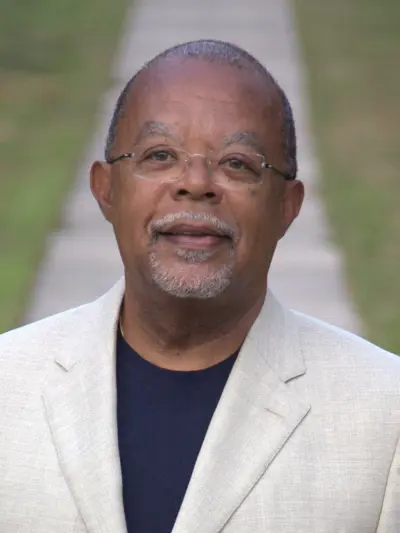
Henry Louis "Skip" Gates Jr. is an American literary critic, professor, historian, filmmaker, and public intellectual who serves as the Alphonse Fletcher University Professor and Director of the Hutchins Center for African and African American Research at Harvard University. He rediscovered the earliest African-American novels, long forgotten, and has published extensively on appreciating African-American literature as part of the Western canon.
