Henry Flynt Quotes
Around 1967 I began backing away from dogmatic Leninism, not so much because I thought it was false, I just decided there was nothing utopian about it.
Flynt, Henry. Interview by Kenneth Goldsmith. WFMU, 26 Feb. 2004.


Since the end of WWII till the breakup of the Soviet Union, the Bulgarians were part of the Soviet Bloc and operated under communism that was supposedly based on Marxism. However it was not in many critical respects. But few modern Russian style Communists are familiar with or understand Marxism.

Ataturk was not receptive toward Communism as some other world leaders were at the time. He saw its weakness far earlier than many others.


Lev Davidovich Bronstein. Although Plekhanov was the intellectual giant of Russian communism, he died only two years into the revolution. He was never happy with some of the pragmatic compromises the younger firebrand communist leaders were making from their ideals. By the time he passed away, most, especially the younger, communist leaders like Stalin saw him as an old obstructionist and he was never celebrated as a hero by the communists. It was Trotsky and older leaders like Lenin who appreciated him. See {590463}.


He moved to the U. S. after these events.


His official title was: President for Life, Protector of the People, Maximum Chief of the Revolution, Apostle of National Unity, Benefactor of the Poor, Grand Patron of Commerce and Industry, and Electrifier of Souls and the communists were one of the active groups who wanted to get rid of the brutal dictator.


He had asked a family friend not to bring books by Hemmingway into his home. The friend asked why and received this answer. Koch and his brother were the largest political contributors in the United States, so they had enormous influence on Republicans (they only made political contributions to conservative organizations).
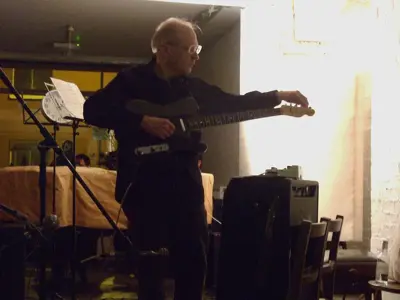
Henry Flynt (born 1940 in Greensboro, North Carolina) is an American philosopher, musician, writer, activist, and artist connected to the 1960s New York avant-garde. He coined the term "concept art" in the early 1960s, during which time he was associated with figures in the Fluxus scene. He later received attention for his anti-art demonstrations against New York cultural institutions in 1963 and 1964.
