Arthur M. Schlesinger Jr. Quotes
Anti-intellectualism has long been the anti-Semitism of the businessman.
Schlesinger, Arthur M., Jr. "The Highbrow in American Politics." Partisan Review, vol. 20, no. 2, Mar.-Apr. 1953, p. 162.


There has always been in America a subpopulation which has distrusted intellectuals and educated people. The bias against intellectuals and well educated people ebbs and flows but it is always present. In this 1920 quotation the suspicion was there as today but did not have the name calling that tended to accompany this bias in the latter part of the 20th century and beginning of the 21st. Some of the bias is in reaction to a snobbishness that has been exhibited by some intellectuals, but the bias against intellectuals is generally strongest amongst the least educated groups in America. The South in particular has tended to have the weakest educational systems and institutions, and the vast majority of intellectuals were against the Southern racism and discrimination that used to prevail so extensively, and the vestige of anti intellectualism is still there despite the fact that the gap between Southern education and institutions is nowhere near as large as it used to be. Religious fundamentalists also are generally more distrustful of intellectuals as even where the intellectuals are religious they tend to be modernists and not fundamentalists. And of course, liberal and conservative intellectuals constantly accuse the other group of dominating the intellectual agenda.


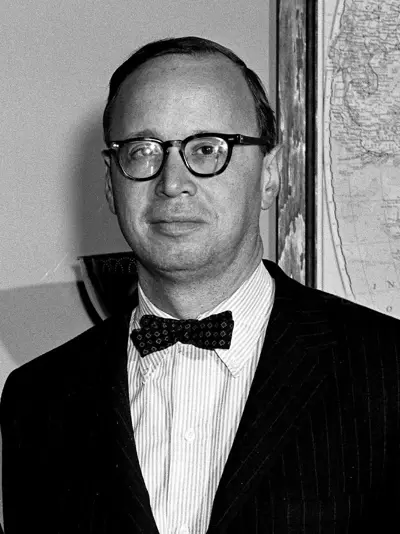
Arthur Meier Schlesinger Jr. was an American historian, social critic, and public intellectual. The son of the influential historian Arthur M. Schlesinger Sr. and a specialist in American history, much of Schlesinger's work explored the history of 20th-century American liberalism. In particular, his work focused on leaders such as Harry S. Truman, Franklin D. Roosevelt, John F. Kennedy, and Robert F. Kennedy. In the 1952 and 1956 presidential campaigns, he was a primary speechwriter and adviser to the Democratic presidential nominee, Adlai Stevenson II. Schlesinger served as special assistant and "court historian" to President Kennedy from 1961 to 1963. He wrote a detailed account of the Kennedy administration, from the 1960 presidential campaign to the president's state funeral, titled A Thousand Days: John F. Kennedy in the White House, which won the 1966 Pulitzer Prize for Biography or Autobiography.
