Richard Hofstadter Quotes
Anti-Catholicism has always been the pornography of the Puritan.
Richard Hofstadter, 1916-1970, Historian, “The Paranoid Style in American Politics,” Harper’s Magazine, November 1964
Sourced by: Eigen's Political and Historical Quotations

In this speech, and in {634756}, he argued against unification to a public that was mostly opposed. The leadership was interested because they were facing the Muslim Ottoman Turks who were getting more powerful each day. The Eastern Emperor, Constantine XI, more of a soldier and politician than a cleric, wanted the military strength of the Franks and other Western European Christian armies to help protect the Eastern Empire and Byzantium and were willing to reunite under the Pope to get it. Gennadios and his faction were not. They prevailed and the next year, the Muslims conquered Byzantium which had little help from the armies of the Western Roman Empire.
In April of 1689, Protestant William of Orange landed in England against Catholic King James I, in a Catholic-Protestant civil conflict which not only affected England but its colonies as well. The Governor and Lieutenant Governor of New York City were confused and wary as to taking immediate sides, but there was a strong anti-Catholic movement in New York City. This group, functioning as “The General Convention for the Province of New-York,” elected Leysler, its leader—later appointing him Lieutenant Governor of New York. Leysler’s forces seized the government and imprisoned the King James Appointed Officials who would not turn against James. Leysler actually governed New York for almost two years. The old guard of New York, after William had been crowned King, attempted to regain the status quo ante. Leysler and his extremist followers saw them as traitors and Papal supporters although they themselves were English Protestants. But their appointment, loyalty and wavering regarding James I made them traitors in the view of Leysler. When initial troops tried to regain power for the original governor and council Leysler, he simply dismissed them as Papists. Finally, in March of 1691 Governor Slaughter, arrived with more troops, and after a significant Battle for New York, captured Leysler and his major followers where were executed shortly thereafter. This incident, sometimes referred to as “Leysler's Rebellion,” represents these American “firsts.” First successful revolution in America; First military coup; First military dictator. First successful counter-revolution. There were some contemporary critics who thought Leysler as interested in custom duties as Papists.

See Justice Richard Cox for a similar view.


It was not until 1780 that Catholics were allowed to even be members of Town Corporations.


This quotation was used by the Lyndon B. Johnson 1964 Campaign as: “We represent the majority of the people in Alabama who hate niggerism, Catholicism, Judaism, and all the isms of the whole world.” So said Robert Creel of the Alabama Ku Klux Klan. He also said, “I like Barry Goldwater. He needs our help.” The second statement was made at a different time.

This is a very important historical quotation in that it shows the extensive degree of anti-Catholic prejudice that existed in America in the late 1930s. Most of the anti-Catholic feeling was based in the absurd but real belief of millions of Protestants that the Pope was trying to control America. Then there was the fear and that American Catholics would take political direction from the Vatican and the Catholic bishops. The perception of the Church was hundreds of years out of date. Most of the anti-Catholic bias reduced along with anti-Semitism in the remainder of the 20th century as Americans became much more religiously tolerant. By the 21st century, religious prejudice still existed but it was limited to a small group of Americans whose views were generally condemned by the American mainstream of thought and opinion.
Before the Protestant Reformation of Martin Luther, there had been a schism of the Catholic Church into the Western Roman Empire—the Latins, headquartered in Rome; and the Orthodox Church—the Greeks, headquartered in Constantinople (Byzantium). One of the main issues of the schism was the Papacy itself. As this quotation shows, Luther was by no means the first to attack the Papacy. Saint Mark’s quotation here was more than 50 years before Luther was born.


What the historian did not know was how similarly the Protestants would behave against the Catholics when they had the power. Since the Catholics were the established church, and the Protestants the new “heretics” the Protestants were on the receiving end of most of the atrocities at the beginning. However, as if they had been scholled by their horrible experiences, they repeated them just exchanging the perpetrators and the victims.

In this extraordinary act, the people who are persecuted are made to pay extra taxes to facilitate their persecution
At the time he was referring to Protestants & Catholics. Today we have Muslims vs. Jews & Christians.

The “Know-Nothings” were populist extremists opposed to anything foreign and immigration and were religiously and racially bigoted—somewhat like the Tea Party of the early 21st century. The difference was that the Tea Party was not anti-Catholic and their bigotry was against foreigners and Blacks and Hispanics. However where the Know-Nothings were proud of their bigotry. Many Tea Party members were distressed by the racists in their ranks, However, they did little to stop bigots from having racist signs and slogans at rallies and did not purge the racists from their midst.
Many Protestant Englishmen were shocked to hear this, having little familiarity with the details of the functioning of the Church of England—the Established Church of Great Britain—in Ireland and the contribution of the Church to the discrimination against Irish Catholics and the poverty of Ireland.


In 1877 Wasburn was dropped from the List of Ministers by the Unitarian Church. He had become very critical of organized and orthodox religion of all kinds.

The King Outlawed Protestant Worship.
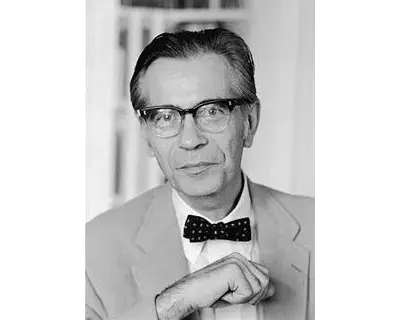
Richard Hofstadter was an American historian and public intellectual of the mid-20th century.
