Thomas Babington Macaulay Quotes
And how can man die better than facing fearful odds, for the ashes of his fathers, and the temples of his Gods?
Macaulay, Thomas Babington. "Horatius". Lays of Ancient Rome, Longman, Brown, Green, and Longmans, 1842, p. 54.


The poem was written for and inscribed upon a monument. The Atheists in Foxholes Monument was donated to Alabama Freethought Association, Inc. by the Freedom From Religion Foundation. It is located adjacent to the Willa Mae Whatley Auditorium, in Fearn Park at Lake Hypatia, Alabama.

Quintus Horatius Flaccus. This famous quotation has been echoed in virtually every language and every country of the world. However, see Ernest Hemingway for a counter view.
Some apologists for the Muslim Brotherhood claim that the organization is social and political and not violent or advocates of terrorism. However, quotations like this one calls clearly for the sacrifice of lives. Hamas, a recognized terrorist organization is the Palestinian Branch and Offshoot of the Muslim Brotherhood which has never repudiated any of their terrorist murders and actively raises money for Hamas. See the original founding principle of the Muslim Brotherhood—{621776}

This would be like an American President firing the congressional chaplains. However this is only one small, but telling, example of Atatuk’s secularization of the nation which had a great deal to do with Turkey becoming a modern great power—by far the strongest and most developed of the Islamic world.


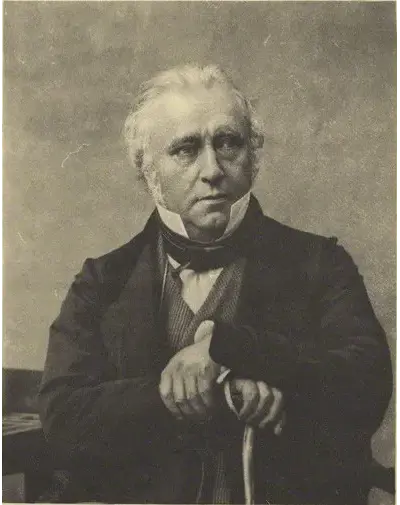
Thomas Babington Macaulay, 1st Baron Macaulay, FRS FRSE PC was a British historian and Whig politician. He wrote extensively as an essayist, on contemporary and historical sociopolitical subjects, and as a reviewer. His The History of England was a seminal and paradigmatic example of Whig historiography, and its literary style has remained an object of praise since its publication, including subsequent to the widespread condemnation of its historical contentions which became popular in the 20th century.
