Dorothy Dunnett Quotes
And at thirty-eight a brilliant exponent of arms and a knight of the great fighting and religious Order of St John, the Chevalier de Villegagnon had absolutely no use for common sense himself, but respected it in the laity.
Dunnett, Dorothy. Queens' Play. Cassell, 1964.


Odo of Chatillon-Sur-Marne. The Pope and others were so anxious to mount a successful military crusade, that he nullified all the usual requirements for knights and chivalry. See {617185} to see how far the Pope was willing to go to get fighters for the Crusade.

The line was a quotation from Chaucer.
Chivalry was a set of rules that regulated the behavior of knights especially as to their behavior in battle. It was the Medieval equivalent of the Geneva Convention. At the time knights fought against knights and peasants fought against peasants. After time the fighting was mixed. Previously, if a knight was subdued by other knights, he would surrender and promise to fight any more and that would be honored. But when a small group of peasants brought down a knight in armor, he could not surrender. He had probably killed other lightly armored peasants who were friends, and the peasants did not trust the knights. So typically, the peasants just killed the fallen knight. Social class determined the concepts of honor, fairness, trust, and chivalry came to an end.


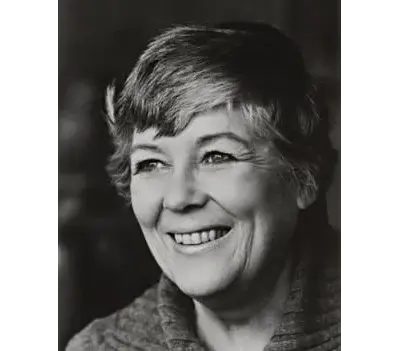
Dorothy, Lady Dunnett OBE was a Scottish novelist best known for her historical fiction. Dunnett is most famous for her six novel series set during the 16th century, which concern the fictitious adventurer Francis Crawford of Lymond. This was followed by the eight novel prequel series The House of Niccolò. Her other work include a novel concerning the historical Macbeth called King Hereafter (1982), and a series of mystery novels centered upon Johnson Johnson, a portrait painter and spy.
