Otto of Freising Quotes
An historian's task is to extol the famous deeds of famous men in order to incite the hearts of mankind to virtue, but to veil in silence the dark deeds of the base or. if they are drawn into the light, by the telling to place them on record to terrify the minds of those same mortals.
This historian’s view of the role of the historian, while totally at odds with academic, cultural, and political values with America and most industrial democracies. However, he does represent the proper role of the historian as seen by most theocracies and non-democratic nations. Indeed, there are countries today where this statement would be considered a model for patriotic historians and journalists. Another interesting comparison can be made between Otto and another historian of the era who represented a more democratic academic and journalistic point of view. So the issue has been in conflict for over a thousand years. See Anna Comnena {587993}
Otto of Freising, ~1111-1158, French Catholic Bishop & Historian, The Deeds of Frederick Barbarossa, .
Sourced by: Eigen's Political and Historical Quotations

This is an amazingly contemporary view of the role of the historian. However this was at odds with most of her contemporaries. See {587995}.


This view is very cultural and is not held by all historians. Japanese historians have always had a strong pressure to defend the nation and the Emperor. Islamic historians have almost never criticized Islam or the Phophet. These are just two examples.


In 1976 Chilean Dictator Augusto Pinochet gave orders to assassinate a Chilian Dissident Orlando Letelier in Washington DC. He had been suspected but there was no evidence with which to bring him to trial in his lifetime, However, President Barak Obama ordered the secret file on the assassination declassified in 2016 — 40 years after the event.


He was summarizing the determinations of the assembly. The great debate was whether to bring the former Khmer Rouge officials to trial for the extermination and genocide of almost 2 million Cambodians. Many of the accused war criminals were very wealthy and bribed current legislators to prevent trials. Also, many of the legislators who were alive and lived through the killings were complicit themselves. Meanwhile those whose relatives had been brutally killed in the killing fields and elsewhere constantly, demanded justice. Western countries generally urged through the UN that the perpetrators be brought to justice, but the Cambodian leadership feared splitting their country apart again and even more bloodshed which the forces of the accused threatened if the government attempted to hold them accountable. The writer, for example, was a leading Khmer Rouge official before he defected, and in any set of trials of others, he would likely be implicated.

Samuel Langhorne Clemens, 1835-1910. Many historians would argue with the use of the verb “lie”. Many admit to some “embellishment” to illustrate and clarify points for the reader. Twain, a great humorist uses the technique of being literal at some points and extreme at others.
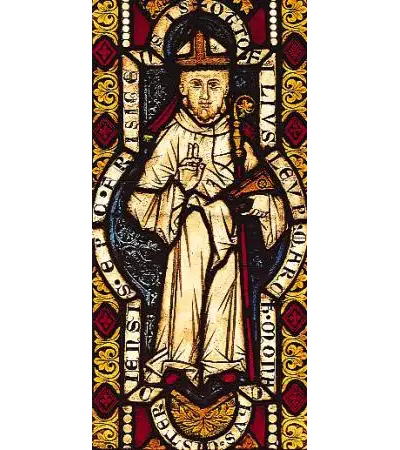
Otto of Freising was a German churchman and chronicler. He was Otto I Bishop of Freising as from 1138.
