James Bovard Quotes
Americans' liberty is perishing beneath the constant growth of government power. Federal, state and local government's are confiscating citizens' property, trampling their rights, and decimating their opportunities more than ever before.... American liberty can still be rescued from the encroachments of government. The first step to saving our liberty is to realize how much we have already lost, how we lost it, and how we will continue to lose unless fundamental political changes occur.
Bovard, James. Lost Rights: The Destruction of American Liberty. St. Martin's Press, 1994, p. 1.


The "administrative state" was the term used for a government had had powers and used them to regulate things and areas of society without each specific regulation being voted upon by the legislature. In America sicne the New Deal there have been so many areas that have regulations that a single agency like the Environmental Protection Agency might issue in a year more regulations than the entire Congress considers in all areas put together. All these regulatory powers are delegated by Congress passing legislation authorizing it, and Congress can legislate any change in any regulation it wants, but the modern state is so complesx and areas so specialzied that Congress has preferred to delegate. There are a few who legal scholars and politicians who believe that it is unconstitutional for the legislature to delegate powers to the executive branch and no regulations have validity unless specifically passed by Comgress. There are some others who have not taken a position on this point but who believe that of an administrative state can regulate phases of citizens lives it is bound to circumscribe personal freedom as all legislation does to some extent. This quotation was used by opponents of Judge Gorsuch in arguing that he was unfit for the Supreme Court as he was out of touch with the Administrative State which America gradually became and rapidly in the New Deal and in the 80 years thereafter a very extensive administrative state. Gorsuch's views were based on classic political pholosophy but there were some ultra conservatives who did not want any regulation of business by Congress or Administrative Agencies and therefore supported Gorsuch and the few others with this view as if Agencies were not able to issue regulations there was no practical way that Congress could issue as many and regulation would be reduced which is what they desired.

See {587703} for a similar statement by a Supreme Court Justice.


His political view was one of general opposition to Government—especially large Government. However, even the Conservative voters whose nomination he sought did not elect him to any public position. His inherited fortune allowed him to run for office and campaign.


At that time, ideology was not a driving political force and individual politicians often were hard to classify. For example, Humphrey was at the far left—an ultra liberal. Yet he was a staunch advocate of the right to bear arms. 50 years later there were no liberals who did not want to restrict gun ownership, And at that time, many Republicans were advocates of gun control, an unheard of situation in the 21st century beginning.
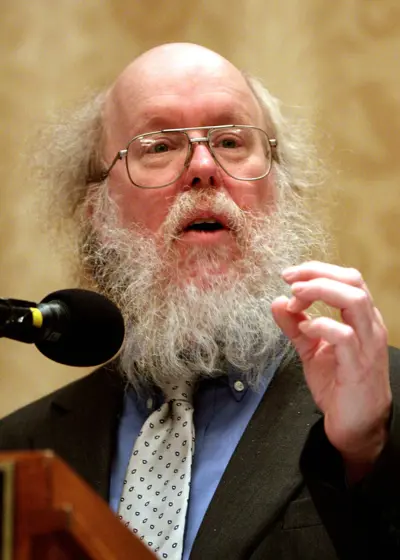
James Bovard (/bəˈvɑːrd/; born 1956) is an American libertarian author and lecturer whose political commentary targets examples of waste, failures, corruption, cronyism and abuses of power in government. He is a USA Today columnist and is a frequent contributor to The Hill. He is the author of Attention Deficit Democracy and nine other books. He has written for the New York Times, Wall Street Journal, Washington Post, New Republic, Reader's Digest, The American Conservative, and many other publications. His books have been translated into Spanish, Arabic, Japanese, and Korean.
