Apollonius of Tyana Quotes
All the earth is mine, and I have a right to go all over it and through it.
Philostratus. The Life of Apollonius of Tyana, The Epistles of Apollonius and the Treatise of Eusebius. Translated by F. C. Conybeare, vol. 1, William Heinemann, 1912, p. 59.


See {638124} for how this Biblical passage evolved into a concept of property ownership


While Jefferson was clear on this point, there were other forces and points of view that did not recognize Indian rights and were prepared to use force to obtain Indian lands. These, together with some Indians who made bad and sometimes corrupt bargains and treaties ceding land, produced the loss of most of the Indian land in America.

They were corresponding about the anti-Chinese movement in America and the attempt to exclude Chinese from immigration to the United States and ethnically cleanse the country.

Jackson refused to obey this decision, He was the only American President who disobeyed a Supreme Court Decision. In doing this, he killed tens of thousands of Indians, allowed the Southern Whites to steal most of the Cherokee land. His Indian Removal, contrary to this Supreme Court decision, was the worst case of ethnic cleansing in the history of the United States.


This is an important quotations for two reasons. First, one of the white Europan myths in the colonial era was that the Native America had not concept of land ownership and title. This quotation clearly refutes that/ Second, this shows that some Europeans coming to the new world opposed the view that the white Christians and a moral right to the Native American “heathen” land. A few like Williams did not.

Day was often associated with left wing causes, but she was very hard to classify in traditional political terms. This quotation shows that unlike most communists and many socialists, she was an advocate of private property although she fought for the ability of a larger proportion of the population to have property.

Most of her modern admirers tend to repress this quotation which is very embarrassing for most modern conservatives. However, there is a minority of thinkers who maintain that land, unused, is open to anyone who will make use of it to improve civilization. Many conservationists, in contrast, extol unused land for preservation.


This was a classic debate over universal male suffrage. Rainborough had made a forceful argument for equality as a spokesperson for the Levellers in this famous debate. See {619710}. Ireton eloquently gave the classic counter-argument that property owners had much more at stake and therefore should have much more of a say on governmental affairs. Early America actually sided with Ireton, but modern America holds with Rainborough.


Earlier, treaties had been negotiated whereby whites purchased certain Indian lands. Tecumseh and others had objected not only to the concept of land sale, but to those who had sold the lands {612650}.

The Romans were very organized regarding land ownership. When they conquered Africa, defeating Carthage, they found no written records of land ownership, no deeds, no bills of sale. Therefore, they opened up the entire land mass of Africa for what amounted to public colonization where the land could be worked and claimed legally. Illiterate Africans had no written records, and most areas where under the control of a strongman who “owned” all of the land with no notion of private ownership of land.
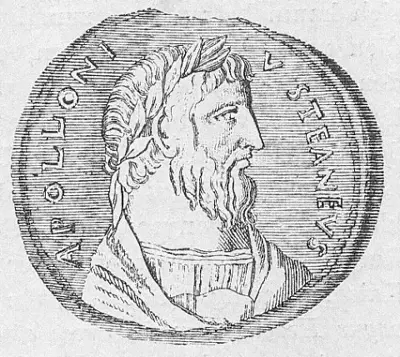
Apollonius of Tyana (Ancient Greek: Ἀπολλώνιος ὁ Τυανεύς; c. 3 BC – c. 97 AD), sometimes also called Apollonios of Tyana, was a Greek Neopythagorean philosopher from the town of Tyana in the Roman province of Cappadocia in Anatolia. He is the subject of Life of Apollonius of Tyana, written by Philostratus over a century after his death.
