Cyrus the Great Quotes
All should be free to worship their God without harm …. No one’s home [may] be destroyed and no one’s property be looted.
Often referred to as the first declaration of human rights.
Cyrus the Great, 600 BC - 529 BC, Persian King, Cylinder, Babylon, 539 BC
Sourced by: Eigen's Political and Historical Quotations


At first this clause appears to be very enlightened and establishing freedom of conscience. This clause allowed Catholics to practice freely whereas in other colonies they could not. However, as one reads on, it becomes clear that the “tolerance” is limited to Christians only. Then if one examines the exception within the parentheses and refer to the rest of the act—see {611994}—, one finds that even Christians who have certain theological beliefs are to be put to death—those for example who deny the holiness of the Trinity such as Unitarians who were a major group in the New England Colonies. It was a significant step at the time however to protect Roman Catholics.


Wesley had been to Island several times and was interested in affairs there. He was a strong advocate of freedom of religion but the violence of the earlier religious conflict made him very wary of the Irish Roman Catholics who seemed to him particularly prone to religious violence.


This quotation which appears absurd on the surface given Iran’s terrible record with religious minorities provides insight to Islamic orthodox thought. For the orthodox Muslim, Sharia—Koranic Law—is the basis of the society. God defines the rights of people and their obligations. Whatever rights are provided by Sharia, Khomeini and some others wished to provide them equally to religious minorities also. However, those rights do not include the right to criticize the Islamic law or the leaders who implement it. That would be heresy if done by a Muslim, a Christian, or a Jew. A Christian church may not erect a public cross or ring bells on Sunday. That is prohibited by the Koran and is imposed on all. Bahai religious adherents are tracked down in the Islamic Republic and are often executed. ‘What about their rights?’ they ask. The answer is that the Bahai were Muslims who have become “backsliders” and heretics, and under Sharia, they must be executed for heresy; they are deemed to be heretical Muslims and not members of a minority religion.


The first Jewish Publication in the United States

A Capuchin monk and his Muslim servant had disappeared from the streets of Damascus just before the Jewish Passover. A rumor got started that Jews had kidnapped and murdered them so that they could use their blood in making the traditional Passover matzoh. This was an old disproven canard from the Middle Ages. This absurd lie, which persists in some Islamic nations, was referred to as the “Blood Libel”. However many Jews were rounded up and jailed with calls for their execution. Protests were made by countries the world over. Van Buren mobilized the American diplomatic machinery in one of America’s first coordinated diplomatic campaigns in defense of human rights. Instructions were sent to American diplomats in Turkey and Egypt to strongly send the American message and position. It was successful. See {613362}.


Michener had chaired a county campaign committee and discovered that most great amount of the virulent, anti-Catholic, messages and materials that impinged on the campaign were tax-exempt religious publications and church newsletters.
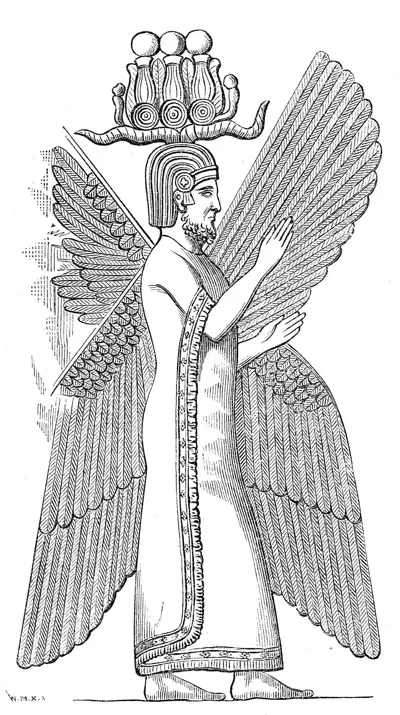
Cyrus II of Persia, commonly known as Cyrus the Great and also called Cyrus the Elder by the Greeks, was the founder of the Achaemenid Empire, the first Persian Empire. Under his rule, the empire embraced all the previous civilized states of the ancient Near East, expanded vastly and eventually conquered most of Western Asia and much of Central Asia. From the Mediterranean Sea and Hellespont in the west to the Indus River in the east, Cyrus the Great created the largest empire the world had yet seen.
