George Mason Quotes
All men have an equal, natural and unalienable right to the free exercise of religion, according to the dictates of conscience; and that no particular sect or society of Christians ought to be favored or established by law in preference to others.
Mason, George. "Proposed Amendments to the Constitution." 27 June 1788. The Debates in the Several State Conventions on the Adoption of the Federal Constitution, edited by Jonathan Elliot, vol. 3, J.B. Lippincott & Co., 1891, p. 659.


This quotation is extremely important because it was completely antithetical to the United States basic philosophy of freedom of religion. Anti-Catholic prejudice which already existed, seized on this quotation to demonstrate that the Catholic Church was a danger to Protestantism and the other religions that had come to America and the many that were created in America. It would take 70 years for the anti-Catholic prejudice had diminished sufficiently to elect a Catholic President—JFK.

Pen name: Jack Nipps

The Senate was presented with James Madison’s Language for the First Amendment. These three alternatives were proposed and rejected. The rejected versions turn out to have been very important. Some have argued that the First Amendment does not prohibit Congress making laws regarding religion as long as it doesn’t favor one religion over another—for example pay for clerics of all religions. However, that was the third proposal and it was rejected in favor of the high wall of separation proposed by Madison.


Abdul Rahman, Afghan citizen, had converted from Islam to Christianity 16 years before. Conversion from Islam is a capital crime under Sharia Law which was the law of Afghanistan even after the Taliban had been overthrown. He was jailed and threatened with death. Statements like this and others made directly to the government persuaded the Afghan politicians to go against their mullahs who demanded the death penalty as is proscribed by Islamic Law—Sharia. The judges tried to get Rahman to recant and he would not (see {589518}). So they finally decided that he must be mentally insane and therefore could not be tried, and the problem was solved that way.

Opponents of the strict separation of church and state use this quotation to support their view. However, Story herein describes public sentiment, not what was passed and ratified in the Constitution and Bill of Rights. See {614309} and {614310} for his statements from the same work that show that there was no question in his mind but that church and state are separated by the Constitution and the First Amendment.


There was freedom of religion for Protestants in early New Jersey. Note that Catholics and Jews were not allowed to hold office. This constitution was in force until 1844 when the prohibition was repealed by new constitution. Under the original constitution, men were convicted for blasphemy. See {621063} .


By the beginning of the 21st Century, some Republicans had perfected the art of naming legislation completely contrary to its intent and effect in order to make opposition to it more difficult for opponents in the legislature. But nothing they ever did came close to the audacity of naming this legislation, The Toleration Act, as it was about the most intolerant legislation ever passed in America. Exactly what the motivation of the legislative drafters was is not known. One theory is that as a Catholic Colony, perhaps they really thought that they were being tolerant as they would not execute Protestants except Unitarians. In any event is was a low point in American history and was one of the examples that was before the Founding Fathers when they added the First Amendment to the Constitution. See {624142} for the text.


This is a critical quotation on the government establishment of religion issue. There are a few people who have argued over the years that the Founding Fathers and their culture was religious and where they were careful to avoid favoring one religion over another, they did NOT intend to put atheism on the same equal plane as religion as far as government action is concerned. However, some of the Founding Fathers were atheists, and some others like John Adams were deists—they believed in a God but not in the Trinity or in Judaism or any organized religion. So this quotation makes it clear that the First Amendment does NOT favor religion over non religion or secularism. Atheism must be on an equal footing but not on a higher plane.

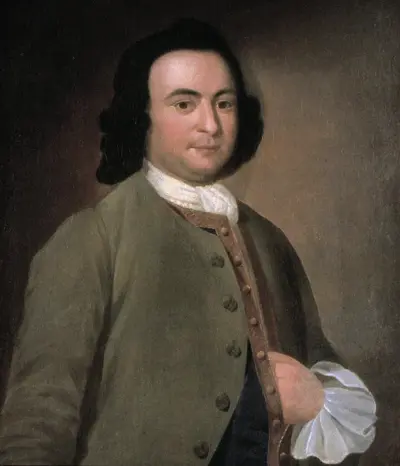
George Mason IV was an American planter, politician and delegate to the U.S. Constitutional Convention of 1787, one of three delegates who refused to sign the Constitution. His writings, including substantial portions of the Fairfax Resolves of 1774, the Virginia Declaration of Rights of 1776, and his Objections to this Constitution of Government (1787) opposing ratification, have exercised a significant influence on American political thought and events. The Virginia Declaration of Rights, which Mason principally authored, served as a basis for the United States Bill of Rights, a document of which he has been deemed a father.
