Homer Quotes
All deaths are hateful to miserable mortals, but the most pitiable death of all is to starve.
Homer. The Odyssey. Translated by A.T. Murray, Harvard University Press, 1919, p. 463.


Reflection on the Irish Potato Famine of 1845-1850


The Khmer Rouge starved their political enemies in killing fields.


During the Irish potato famine, other crops continued to be exported from Ireland. Some argued that without the exports the Irish economy would totally collapse exacerbating the pain to Ireland, but many others disagreed and argued that all available food should be used for the people of the country. For his seditious activities he was sentenced to penal servitude for life. He escaped and came to America where he entered politics


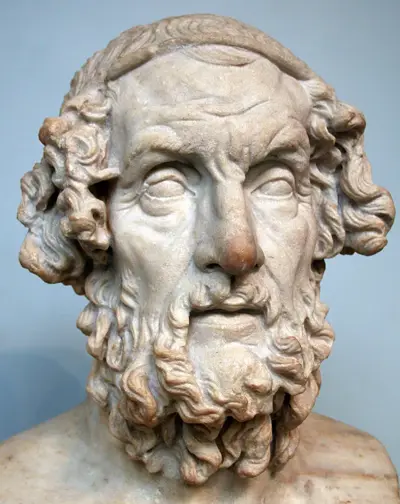
Homer (/ˈhoʊmər/; Ancient Greek: Ὅμηρος [hómɛːros], Hómēros) was the presumed author of the Iliad and the Odyssey, two epic poems that are the foundational works of ancient Greek literature. The Iliad is set during the Trojan War, the ten-year siege of the city of Troy by a coalition of Greek kingdoms. It focuses on a quarrel between King Agamemnon and the warrior Achilles lasting a few weeks during the last year of the war. The Odyssey focuses on the ten-year journey home of Odysseus, king of Ithaca, after the fall of Troy. Many accounts of Homer's life circulated in classical antiquity, the most widespread being that he was a blind bard from Ionia, a region of central coastal Anatolia in present-day Turkey. Modern scholars consider these accounts legendary.
