Charles Scott Sherrington Quotes
… after some hundreds of years of experience we think that we have learned … how to teach what is known. But now with the undeniable upsurge of scientific research, we cannot continue to rely on the mere fact that we have learned how to teach what is known. We must learn to teach the best attitude to what is not yet known.
It was not very long before there was no scientific field any longer in which any human being could learn everything that is known. Sherrington was one of the first to see that coming.
Charles Scott Sherrington Quoted in Eccles, J.; Gibson, W. (1979). Sherrington: His Life and Thought. Berlin; New York: Springer International. pp. 1–6, 15, 24–25. ISBN 0-387-09063-0.
Sourced by: Eigen's Political and Historical Quotations


Sir Humphry was a religious man, and yet he focused on one of the great differences between science and religion. The latter is presumed true and eternal by its faithful, while science is never such. No truth is eternal in science and rarely does a scientific “truth” last 100 years without modification, elaboration or additional complexity. This is one of the reasons that scientists make poor witnesses at Congressional hearings. They are never certain of anything if they are good scientists. Witnesses from other fields testify with much more certainty as they are motivated by self interest or ideology where doubt is unacceptable.


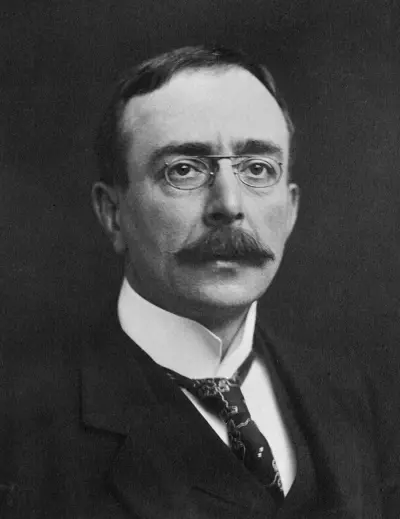
Sir Charles Scott Sherrington OM PRS FRCP FRCS was an English neurophysiologist, histologist, bacteriologist, and a pathologist, Nobel laureate and president of the Royal Society in the early 1920s. He received the Nobel Prize in Physiology or Medicine with Edgar Adrian, 1st Baron Adrian, in 1932 for their work on the functions of neurons. Prior to the work of Sherrington and Adrian, it was widely accepted that reflexes occurred as isolated activity within a reflex arc. Sherrington received the prize for showing that reflexes require integrated activation and demonstrated reciprocal innervation of muscles (Sherrington's law). Through his seminal 1906 publication, The Integrative Action of the Nervous System, he had effectively laid to rest the theory that the nervous system, including the brain, can be understood as a single interlinking network. His alternative explanation of synaptic communication between neurons helped shape our understanding of the central nervous system.
