Albert Camus Quotes
A tyrant is a man who sacrifices a whole nation to his ideal or his ambition.
Albert Camus, 1913-1960, French Nobel Laureate in Literature, Quoted in The Washington Post, November 11, 1990
Sourced by: Eigen's Political and Historical Quotations


FDR was a marvelous judge of men and their character. De Gaulle could not separate himself from France and pushed the French Republic towards one man rule (himself) as much as anyone since Napoleon Bonaparte.


While that is certainly true and has been borne out by history, the same thing can be said of democratic rulers and even many democratic politicians of lower rank. Yes men abound and not politicians not only want them but arguably need them in order to maintain the assurance and positivity that most voters associate with good leadership.


Soon he had the power of a dictator but he didn’t force his will on the vast majority of the Cubans. His decrees made all the wealthy and the cronies of the dictator Batista outraged and most of them left Cuba. He was a dynamic demagogue and the people handed him dictatorial powers which he did not reject. He was so popular that he was the only leader in the Americas who would give 4 hour speeches and move through the streets without any bodyguards until the United States and dissident expatriates tried to assassinate him. With all that popularity, none the less he would not allow open criticism of his regime and jailed many political opponents. So he indeed became a dictator but never needed the machine gun to maintain power.


He served a 20 year sentence. Unlike many of the other Nazis, upon reflection of his experience, he came to realize the wisdom of Lord Acton’s observation about power. See {292904}.

Historically, most dictators have announced their worst intentions and in many cases were not believed by much of the world who then learned that they had made a serious error.
Referring to the autocratic President of Turkey, Recep Tayyip Erdogan.


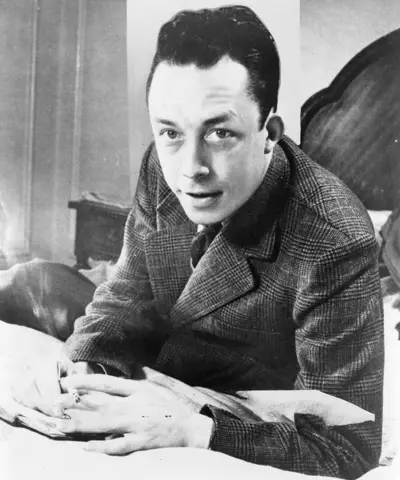
Albert Camus was a French philosopher, author, and journalist. He won the Nobel Prize in Literature at the age of 44 in 1957, the second-youngest recipient in history. His works include The Stranger, The Plague, The Myth of Sisyphus, The Fall, and The Rebel.
