Patrick Chappatte Quotes
A real totalitarianism is at work in the world and wants to impose its views not only on Arab Muslims, but on the West. The same way that they veil women, Islamic radicals want to veil cartoons in the press.
Chappatte, Patrick. Quoted in "European Cartoonists Back Danish Colleagues" by Alan Riding. The New York Times, 5 Feb. 2006.

In September of 2005 a Danish Newspaper published some political cartoons showing the hypocrisy of some Muslims who use Islam to justify murder of innocents and terrorism. Months later, many in the Middle East protested vehemently and Muslim riots broke out and Danish boycotts ensued because the Prophet Muhammad's visage was depicted against Islamic tradition. Many Muslim leaders claimed that insulting religion was an “abuse” of freedom of speech including those from nations which regularly publish material that is virulent against Christians and Jews. Although France had a large Muslim minority, reaction of French Muslims was much more mild than that of Middle Eastern Arabs where the governments either encouraged the rioters or refused to take action to deter them from sacking Danish property.


This quotation is hardly believable, even for an ultra extreme, evangelical, Christian, fundamentalist. His paranoia and homophobia went so far as to claim that somehow the only gay Congressman, Jared Polis, was going to bankrupt Christians who did not endorse his homosexuality. How he might do this Klingenschmitt never explained. But then to associate Polis with the Muslim Fundamentalist Terrorist organization ISIS—which executes homosexuals—and claim that Polis would behead Christians in America was over the top. The quotation illustrates the freedom of speech allowed in American political campaigning where the most absurd, libelous, falsehoods are allowed, as well as the fact that an obvious unbalanced person can freely run for office.

Islam had been the center of intellectual thought in the world, until the clerics had decided that innovation itself was a sin and one that called for the death penalty. Although most non-Muslim religions went through stages of death for religious dissent. However, the Koran deals with every part of society. There is no separation of church and state. All knowledge is in the Koran the fundamentalist believes and anyone who expresses a new idea is not only wrong and a heretic, but is dangerous and must be executed. It is therefore not very surprising that the Islamic contributions to science, medicine, and the arts has been so small. The Islamic fundamentalists are opposed by Muslim modernists who try to change the Islamic culture but they are on the minority. Most religions have gone through bad earlier periods where dissent was heresy and warranted death. Fundamentalist Islam is the only one which bans original thought of any kinds even it does not contradict established doctrine.


In September of 2005 a Rose’s newspaper published some political cartoons showing the hypocrisy of some Muslims who use Islam to justify murder of innocents and terrorism. Months later, in January of 2006 many in the Middle East protested vehemently and Muslim riots broke out because the Prophet Muhammad's visage was depicted against Islamic tradition. Many Muslim nations started a boycott against Denmark. Many Muslim leaders claimed that insulting religion was an “abuse” of freedom of speech including those from nations which regularly publish material that is virulent against Christians and Jews. Apologies were demanded from Rose.

Many Muslims used passages in the Koran to justify the terrorist attack on New Work and the Pentagon.


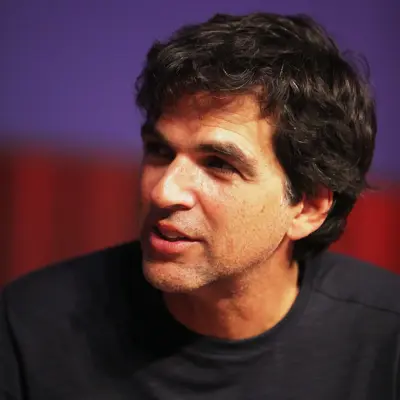
Patrick Chappatte (known simply as Chappatte) is a Lebanese-Swiss cartoonist known for his work for Le Temps, Neue Zürcher Zeitung (Sunday edition), the German news magazine Der Spiegel, and The New York Times International Edition. He also worked as an illustrator for the New York Times and as cartoonist for Newsweek. Many of his cartoons reflect events in Swiss and international news, such as the September 11 attacks, the rise of the Swiss People's Party, and the Israeli–Palestinian conflict.
