Michael Moore Quotes
A lot of people on Capitol Hill don't want to talk to me.
Moore, Michael, director. Fahrenheit 9/11. Lions Gate Films, 2004.


As Secretary of State, Powell was going to address the UN Security Council on the 5th and he was coordinating his speech with the other agencies of the government. His criterion was that he only wanted to make accusations that were backed up by incontrovertible evidence. However, VP Richard Cheney and his aide, Scooter Libby, kept inserting an accusation that Iraq was involved with and supported Al Qaeda. This was one of the many speculations that those who wanted to justify attacking Iraq kept using as Domestic propaganda. When Powell asked for proof or intelligence reports and none could be provided, he removed the accusation from the speech explaining why. However, at the last minute, Cheney and his staff put the accusation back in, and that triggered the quotation. Unfortunately, Powell was so busy fending off totally absurd accusations, that he accepted the CIA assurances {79468} that Iraq was developing nuclear weapons that were about to be operationalized and never heard from those who questioned the credibility of the sources for the basic accusation. Powell had great trust among the diplomats of the world then gave the United States version to the Security Council and justified our coming invasion of Iraq. But the intelligence report, despite the assurances of the CIA and the Vice President, was false and Iraq not only was not close to a nuclear weapon but he had no program at all at that time to try and develop one. Powell resigned and his credibility about the world was ruined as he was then seen as just another lying politician.


_0_PostageStamp_47x47.jpg "Chairman of the Joint Chiefs of Staff Navy Adm. Mike Mullen gives an interview to John Dickerson during the CBS news program Face the Nation in Washington, D.C., July 5, 2009. During the interview, Mullen discussed the wars in Iraq and Afghanistan, North Korea's recent missile tests and his recent visit to Russia. (DoD photo by Mass Communication Specialist 1st Class Chad J. McNeeley, U.S. Navy/Released)")


This quotation illustrates a great problem with treaties in international law. Here an opponent of the Egyptian regime and one who disapproves of the regime before it, wants to repudiate the treaties that had been signed by previous Egyptian governments. So when there is a regime change, can a new regime repudiate earlier treaties? International law says no, but if a new government refuses to follow its obligations, then it is left to the other treaty partners to put pressure on them--breaking diplomatic relations, trade sanctions, even war. For example, President Thomas Jefferson made a treaty with the French Dictator Napoleon and bought the Louisiana Territory which includes a number of current American states. If a new French government abrogated the treaty of the dictator on the grounds that it did not represent the will of the French people and tried to take back their land, war could ensue. Nations very rarely repudiate treaties for if they did, who would sign any new ones?

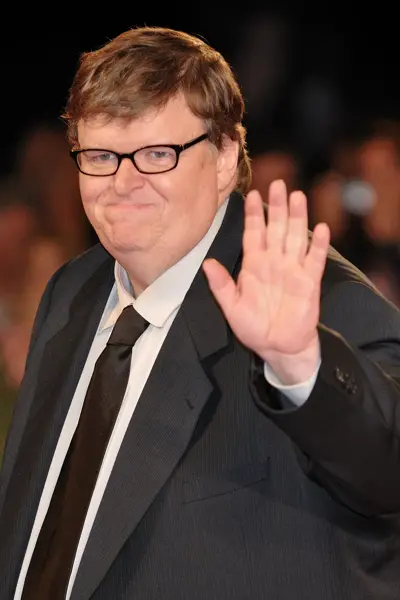
Michael Francis Moore is an American documentary filmmaker, author, and activist. His works frequently address the topics of globalization and capitalism.
