Percy Bysshe Shelley Quotes
A husband and wife ought to continue so long united as they love each other. Any law which should bind them to cohabitation for one moment after the decay of their affection, would be a most intolerable tyranny, and the most unworthy of toleration.
This was an incredibly radical notion at the time. For Catholics, there was no divorce of any kind allowed. And under the Church of England rules, a husband could get a divorce for a wife’s adultery. The social stigma of the rigid English society of the time was enough to make couples stay together long after they had lost affection and were even involved with others. Shelly saw this as a freedom and human rights issue.
Percy Bysshe Shelley, 1792-1822, English Poet & Reformer, Notes
Sourced by: Eigen's Political and Historical Quotations

This idea which would become seriously considered in the 1960s, was a totally radical one at the beginning of the 19th century. With people living so much longer, the idea is no longer radical but has become another polarizing issue in the political culture wars. See {627925} where Shelley goes even further.


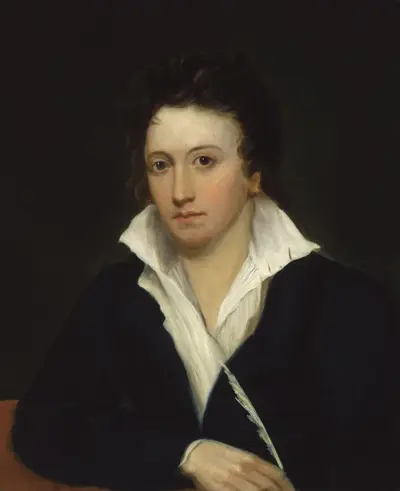
- Born: August 4, 1792
- Died: July 8, 1822
- Nationality: English
- Profession: Poet
Percy Bysshe Shelley was one of the major English Romantic poets. American literary critic Harold Bloom describes him as "a superb craftsman, a lyric poet without rival, and surely one of the most advanced sceptical intellects ever to write a poem." A radical in his poetry as well as in his political and social views, Shelley did not achieve fame during his lifetime, but recognition of his achievements in poetry grew steadily following his death and he became an important influence on subsequent generations of poets including Browning, Swinburne, Hardy and Yeats.
