Harold J. Laski Quotes
A healthy loyalty is not passive and complacent, but active and critical.
Harold J. Laski, 1893-1950, English Political Scientist, The Dangers of Obedience, 1930
Sourced by: Eigen's Political and Historical Quotations


Urging compromise and ratification of the Constitution: Franklin was actually too weak to deliver the speech which he had written the night before. It was read for him by James Wilson of Pennsylvania.

There was a legal requirement that all cadidates for the parliament had to sign before the election an oath swearing to take their seat if elected to close off the possibility that some would cripple the parliament by winning but not taking their seats. De Valera wanted to run, and fully intended to take his seat, but had promised to sign no oaths about the parliament elections. On the last day possible, he went to the election clerk who gave him a piece of paper with the oath printed on the top and below it, the lines for candidate signatures. De Valera took a blank piece of paper and covered the oath but leaving the signature line exposed. He then signed the line and made sure that the clerk would remember that he has not signed an oath, but had signed a blank piece of paper where the oath could not be seen. To him this was a very important distinction but if failed to convince most other Irishmen.
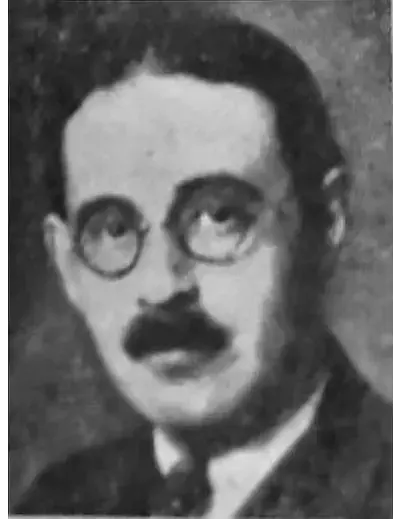
Harold Joseph Laski was an English political theorist and economist. He was active in politics and served as the chairman of the British Labour Party from 1945 to 1946 and was a professor at the London School of Economics from 1926 to 1950. He first promoted pluralism by emphasising the importance of local voluntary communities such as trade unions. After 1930, he began to emphasize the need for a workers' revolution, which he hinted might be violent. Laski's position angered Labour leaders who promised a nonviolent democratic transformation. Laski's position on democracy threatening violence came under further attack from Prime Minister Winston Churchill in the 1945 general election, and the Labour Party had to disavow Laski, its own chairman.
