James Weldon Johnson Quotes
A great wave of humiliation and shame swept over me. Shame that I belonged to a race that could be so dealt with; and shame for my country, that it, the great example of democracy to the world, should be the only civilized, if not the only state on earth, where a human being would be burned alive.
Johnson, James Weldon. The Autobiography of an Ex-Colored Man. Sherman, French & Company, 1912.

The issue of slavery which had been suppressed in Congress for the first decades of the nation broke out when Missouri statehood was considered. By previous agreement, slavery was not even discussed in Congress but the time period elapsed. Tallmadge not only proposed that no more slaves could come into Missouri {613176} but most shocking to the Southerners was that every person born in the new state would be free at the age of 25. In a generation, there would be no more slavery in Missouri and there would be no economic compensation for slave owners at all. The House of Representatives accepted the amendment, but it failed in the Senate. At that time, Senators were not elected by voters but were appointed by the state legislators and the Southern slave states had a disproportionate share of the senate from a population point of view. But what this quotation shows clearly that a majority of the country in 1819 were opposed to slavery and were willing to end it without compensation.


The Tuskegee Experiment was a low point in medical research ethics in American history. Black men who had contracted syphilis, were experimented with and not given treatment even after penicillin was developed, while they have never given their consent or in most cases even told they had the disease. Not only did many of them die, but 40 women contracted syphilis from the men who had never been told that they had the disease. The “experiment” was run by the United States Public Health Service.


Named after penal reformer Johne Howard, 1726-1790. Howard Associations have since been organized in many countries.


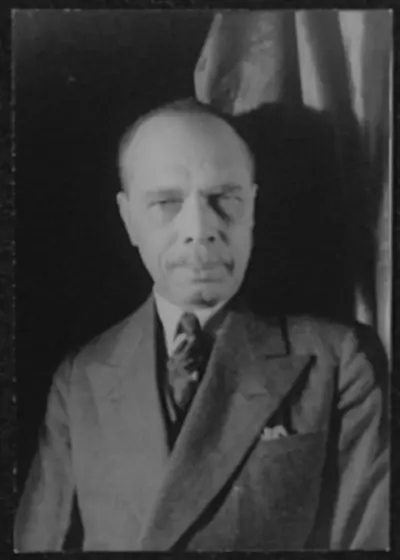
James Weldon Johnson was an American writer and civil rights activist. He was married to civil rights activist Grace Nail Johnson. Johnson was a leader of the National Association for the Advancement of Colored People (NAACP), where he started working in 1917. In 1920, he was the first African American to be chosen as executive secretary of the organization, effectively the operating officer. He served in that position from 1920 to 1930. Johnson established his reputation as a writer, and was known during the Harlem Renaissance for his poems, novels, and anthologies collecting both poems and spirituals of black culture. He wrote the lyrics for "Lift Every Voice and Sing", which later became known as the Negro National Anthem.
