George Sutherland Quotes
A corporation, we have held, is not a "citizen," within the meaning of the privileges and immunities clause … But a corporation is a "person" within the meaning of the equal protection and due process of law clauses.
This quotation is a good example of the hair splitting that is often required in deciding constitutional law.
George Sutherland, 1862-1942, U. S. Supreme Court Justice, Grosjean vs. American Press, 1935
Sourced by: Eigen's Political and Historical Quotations


A constant major issue in industrial democracies are the perceptions, rights and responsibilities of corporations. For those like Romney, corporations should have all the privileges, empathy, rights and obligations of individual people. To most others a corporation is morally and practically a different entity. See {586119}.

The call for individual liberty and the right of personal property by clergy is surprising to many. This Cahier was the consensus of the Clergy of Blois in 1789. There were cahiers of several provinces of France—some by the clergy, some by the nobles. What is fascinating is the emergence of many of the pre-Revolutionary French concepts. The example of the American revolution and its principles was known throughout the educated classes of France.


McCain held this view despite the fact that most other politicians of his party supported removal of any corporate restraints.


This issue arose in 2014 with the Citizens United Case, when a 5-4 decision of the Supreme Court held that political contributions were a form of political speech and corporations had the right of Freedom of Speech. This time there were 4 dissenters.
Romney was trying to explain that the Supreme Court had recently ruled that for purposes of placing limits on campaign donations, corporations were entitled to the same rights of free speech and contributing money as people. The candidate chose this statement to express that view. However, the way Romney phrased it made many people suspect that perhaps, because of his lifetime corporate activity, he really thought that there were no differences between corporations and people. This suspicion reinforced a public feeling that Romney was much more corporately oriented than he was people oriented, and that hurt Romney with many voters.


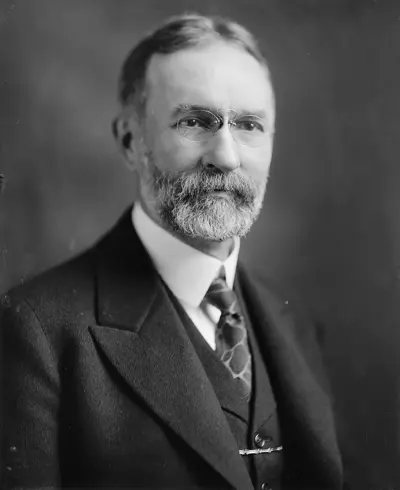
George Alexander Sutherland was an English-born U.S. jurist and politician. One of four appointments to the Supreme Court by President Warren G. Harding, he served as an Associate Justice of the U.S. Supreme Court between 1922 and 1938. As a member of the Republican Party, he also represented Utah in both houses of Congress.
