Wilfrid Laurier Quotes
A colony, yet a nation - words never before in the history of the world associated together.
Skelton, Oscar Douglas. Life and Letters of Sir Wilfrid Laurier. Vol. 2, Century Co., 1922, p. 73.


The Chief Secretary, Lord Castleregh, had put forward a resolution to bring about the unification of Great Britain and Ireland under the single British Parliament at Westminster. He and his allies had bribed a number of the Irish MPs to support the union. With Union some Irish MPs would then be able to win seats representing Ireland in the British Parliament. Although Grattan and most of the Orangemen opposed the Union, 4 months later, the bill passed comfortably. Ironically, Grattan was one of the Irish MPs whose popularity won a seat in the unified British Parliament.


The Ottoman Turks, at war with Russia, exterminated a large proportion of the Armenian population of the then Turkish Empire. Some of the ethnic Armenians were working with Armenians in greater Russia and thus were a risk to the Turks. However, they starved, shot, beat, hung, and bayoneted hundreds of thousands of ethnic Armenians, wiping out entire villages and towns. Despite the fact that women and little children were all killed, Modern Turkey even into the 21st century refused to admit that this was a genocide even though there was ample documentation to prove it was not spontaneous but government ordered by the “Young Turks” then controlling Turkey. See {620603} and {612638} for examples. The modern Turks maintain the view expressed during the genocide that Armenians were a threat to Turkish Independence.

He was a poor governor in general and was fired and replaced by the Dutch East India Company which was a happy occurrence for the colonists. The company was a money making institution and depended on colonists who would farm, trade and manufacture. If they were unhappy, the company would not profit. They would not have minded a tyrant if he could produce profits as some did in the Dutch East Indies, but Kieft was a loser on all counts.

At the partition if India into Hindu and Muslim States, what is now Bangladesh, was a part of Pakistan called “East Pakistan” by the Pakistani government. While India became a thriving democracy, Pakistan with its combination of military strongmen and Islamic Fundamentalists did not fare as well and became a very corrupt, undemocratic military nation. East Pakistan was not contiguous with the rest of Pakistan and was culturally quite different and less religiously fundamentalist. While all Pakistanis suffered from poor government, the East Pakistanis fared worse. Finally, they developed their own identity which was suppressed by the military dictators of Pakistan and the Banglas revolted and Bangladesh became and independent nation.

Madison was defending the proposed Constitution against a vocal minority who complained that the Federal government would be dominant over the States and the large cities. Madison pointed out that it was people who fought the Revolution and sacrificed for it, not States or political entities. The Constitution was to be for the people, not the existing governmental entities. It was for Americans and not for local politicians. The “State’s Rights faction lost the debate, and the Constitution and Bill of Rights was adopted. That is why this quotation is so important. The slavery enthusiasts, racists, and others have constantly tried to diminish the Federal supremacy even to this day.
“Esto perpetua” is Latin for “May it be forever”. Ireland had just obtained the right from England to pass their own laws in their own parliament. They were still under English control but now they were like a colony and not under day-to-day control.


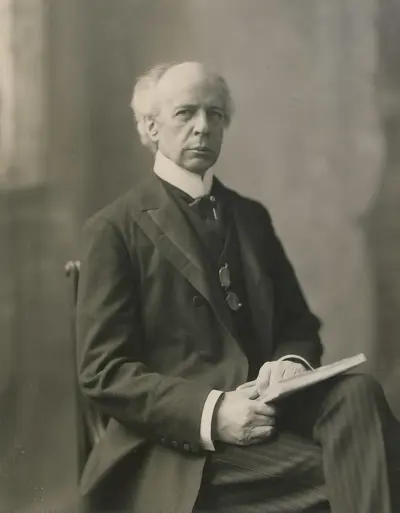
The second child of Carolus Laurier and Marcelle Martineau, Wilfrid Laurier was born in Saint-Lin, Canada East (modern day Saint-Lin-Laurentides, Quebec), on 20 November 1841. Laurier was among the seventh generation of his family in Canada. He was a sixth-generation Canadian. His ancestor François Cottineau, dit Champlaurier, came to Canada from Saint-Claud, France. He grew up in a family where politics was a staple of talk and debate. His father, an educated man having liberal ideas, enjoyed a certain degree of prestige about town. In addition to being a farmer and surveyor, he also occupied such sought-after positions as mayor, justice of the peace, militia lieutenant and school board member. At the age of 11, Wilfrid left home to study in New Glasgow, a neighbouring village largely inhabited by immigrants from Scotland. Over the next two years, he familiarized himself with the mentality, language and culture of British people. Laurier attended the Collège de L'Assomption and graduated in law from McGill University in 1864.
